What to do when your electrical panel shows signs of damage
An electrical panel that looks damaged is never something to ignore. Whether you notice a scorch mark, a cracked breaker face, or discoloration around a switch, the visual condition of the panel often tells you something about what is happening inside the circuits it protects. A damaged panel does not necessarily mean an immediate emergency, but it does call for a careful, step-by-step response. This article walks through what to look for, what to do, and when to bring in a professional.
Step one: confirm the signs of damage
Visible damage can take several forms. You might see burn marks or dark smudges near a breaker slot, rust or corrosion on the metal enclosure, a melted wire insulation visible through a gap, or a breaker that feels loose when you touch it. Sometimes the damage is inside the panel cover, so you only notice it when you open the door. Common indicators include:
- Burn marks or discoloration around a breaker or fuse
- Rust, moisture stains, or corrosion on the enclosure or inside surfaces
- Cracked or broken breaker handles or slots
- Loose breakers that wobble or do not stay firmly in place
If you see any of these, do not touch anything inside the panel yet. The first job is to assess whether the damage is recent or old, superficial or structural.
Step two: assess the severity without touching live parts
Once you have identified signs of damage, the next step is to decide how urgently you need to act. Some damage is cosmetic: a small rust spot on the outside of the enclosure, for example, may not affect the panel's function. But damage near the bus bars, around a main breaker, or close to where wires enter the panel is more concerning. Look for these clues:
- If you see burn marks, check whether the discoloration is only on the surface of the breaker or if it extends to the metal enclosure or wiring. Surface marks may indicate a past arc fault that cleared without causing deeper damage. Marks that are deep, sooty, or accompanied by melted plastic suggest a more serious problem.
- If you see rust or corrosion, consider the environment. A panel in a damp basement or near a water source may develop corrosion over time. Corrosion on the enclosure can often be cleaned, but corrosion on the breaker contacts or bus bars means the panel needs professional attention.
- If a breaker feels loose, check whether the breaker itself is loose in the panel slot or whether the handle is broken. A loose breaker may indicate a poor connection, which can cause overheating and a ground fault risk.
At this stage, do not try to tighten anything inside the panel. The interior is energized, and a loose connection that you attempt to fix without training can lead to an arc fault or overcurrent situation. Leave that to a qualified electrician.
Step three: isolate the affected circuit if possible
If you identify a specific breaker that appears damaged, and the circuit it controls is not critical, you can turn that breaker off to reduce risk. For example, if a breaker feeding a bedroom has burn marks, switching it off stops current flow through that circuit until a professional can inspect it. This is safe to do as long as you stand to the side of the panel and use the back of your hand to flip the breaker. Do not force a breaker that feels stuck; forcing it can cause further damage or a short.
If the main breaker shows damage, or if the damage is on the panel's bus bars or wiring, do not attempt to isolate anything. In that case, the entire panel may need to be de-energized by a professional, and you should leave it on until an electrician arrives unless the situation is clearly hazardous (sparks, smoke, or a burning smell).
Step four: look for related signs elsewhere
Damage inside the panel often has symptoms elsewhere in the house. While you are assessing the panel, think about whether you have noticed any of these:
Flickering lights on the same circuit. A breaker that trips frequently. Outlets that feel warm to the touch. A buzzing or crackling sound near the panel. These are all clues that a loose connection, overcurrent, or ground fault may be developing. If you notice any of these, mention them when you call for help. They help a professional understand what is happening.
Step five: decide whether the panel needs immediate attention
Not every damaged panel requires an emergency call. A small rust spot or a cracked breaker face that does not affect function can wait for a scheduled appointment. But certain conditions call for prompt action:
- Active sparks or smoke from the panel
- A burning smell that seems to come from inside the panel
- Breakers that are hot to the touch (not just warm)
- Visible exposed wiring or melted insulation
If you see any of these, turn off the main breaker if it is safe to do so (again, using the back of your hand and standing to the side). Then call a licensed electrician immediately. Do not attempt to open the panel further or remove any parts.
Step six: schedule a professional inspection
Even if the damage looks minor, it is worth having a professional evaluate the panel. An electrical panel inspection is the standard way to confirm that the panel is safe and functioning within electrical code. A qualified electrician will check for loose connections, overcurrent conditions, ground faults, and proper clearance around the panel. They will also verify that the panel's grounding and bonding are correct, which is critical for safety.
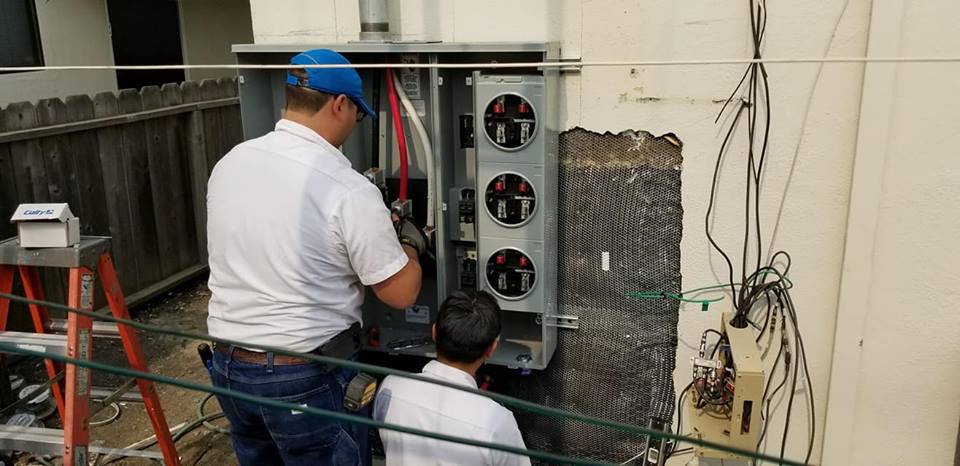
For homes and properties in San Jose and nearby Bay Area communities, Wooding Electric evaluates, replaces, and upgrades electrical panels. They can assess the damage you have found, explain what caused it, and recommend whether a repair or a full replacement is the right choice. An inspection is a straightforward process that gives you peace of mind and helps prevent future issues.
Step seven: understand what caused the damage
Once a professional inspects the panel, they can often tell you why the damage occurred. Common causes include:
- Loose connections that create resistance and heat, leading to burn marks or melted insulation
- Overcurrent from a circuit that is overloaded or from a breaker that is not properly rated for the wire size
- Arc faults from damaged wiring or poor connections inside the panel
- Ground faults where a live wire touches a grounded surface, causing a short
- Corrosion from moisture or environmental conditions
Understanding the cause helps you decide whether a repair is sufficient or whether the panel should be replaced. For example, a single damaged breaker can often be replaced without changing the whole panel, but if the bus bars or main lugs are corroded, the panel may need to be upgraded.
Step eight: decide between repair and replacement
After the inspection, you will have a clearer picture of the panel's condition. A repair might involve replacing one or two damaged breakers, cleaning corrosion from the enclosure, or tightening connections. A replacement might be necessary if the panel is old, if the damage is widespread, or if the panel does not meet current electrical code for your area.
If the panel is more than 20 years old, replacement is often worth considering even if the damage is minor. Older panels may lack modern safety features like arc-fault protection or may not have enough slots for the number of circuits a modern home needs. A replacement also gives you the chance to upgrade the panel's clearance and grounding to current standards.
For anyone in the Bay Area, the decision can also depend on local code requirements. Some municipalities require panels to be brought up to current code when significant work is done. A professional can advise you on what applies in your situation.
Preventing future damage
Once the panel is repaired or replaced, there are steps you can take to reduce the chance of future damage. Keep the area around the panel clear so there is adequate clearance for ventilation and for future access. Do not store boxes, paint cans, or other items in front of the panel. If the panel is in a basement or garage, consider a dehumidifier if moisture is a problem. And if you ever notice a breaker tripping repeatedly, do not simply reset it and forget it. That repeated overcurrent is a sign that something is wrong, and it can lead to damage inside the panel if left unchecked.
Regular electrical panel inspection is a good habit. Even if you do not see visible damage, having a professional look at the panel every few years can catch problems early. Loose connections, minor corrosion, and signs of overcurrent can be corrected before they cause visible damage or a safety hazard.
If you are in the Bay Area and need an evaluation or upgrade, Wooding Electric is one option to consider for professional service. Their team understands the local codes and can help you decide what makes sense for your property.
Corrections
Spot something wrong? Send it to the desk and it gets fixed in the open.